NXD 103450 LiPo Battery (3.7V 3000mAh)
Overview
A single-cell lithium polymer pouch battery in the standard “103450” form factor (a size code, not a brand-specific number — see Key specs). Printed capacity/voltage/energy figures are self-consistent (3.7V × 3000mAh = 11.1Wh exactly), which is a good sign the label is accurate rather than inflated marketing copy. Terminated with a 2-pin JST-style connector (red/black leads visible in the supplied photo).
Key specs
- Nominal voltage: 3.7V (printed on cell)
- Capacity: 3000mAh / 11.1Wh (printed on cell)
- Size code
103450: standard LiPo pouch-cell numbering = 10mm thick × 34mm wide × 50mm long - Charging voltage: not printed on this cell — comparable 103450-format LiPo cells from other makers spec 4.2V ±50mV max charge voltage, ~1500mA max charge current, ~3000mA max continuous discharge (typical-for-class figures, not confirmed for this specific NXD cell — treat as a starting assumption, not a verified rating)
- Connector: 2-pin JST-style, red(+)/black(−) leads
Pinout
| Wire | Function |
|---|---|
| Red | + (positive) |
| Black | − (negative/GND) |
Connector pitch not confirmed from the photo — comparable 103450 cells from other brands commonly ship with a JST-PH (2.0mm pitch) connector, but Heltec boards (including the WiFi LoRa 32 V4 already in this library) use a JST-SH (1.25mm pitch) battery connector. These are not interchangeable — a PH plug will not seat in an SH socket. Before assuming this battery plugs straight into any Heltec board’s battery input, physically check the connector pitch (or just try a test-fit — SH and PH are visually distinguishable by pin spacing) rather than forcing it.
Wiring / typical usage
Never connect a raw LiPo cell directly to a GPIO or unregulated rail — always go through a proper charge/protection circuit. Boards like the Heltec WiFi LoRa 32 V4 have onboard lithium battery management built for exactly this connector type (pending the pitch check above); if using with a bare MCU that lacks onboard charging, add a dedicated LiPo charger IC (e.g. TP4056) and ideally a protection circuit (over-charge/over-discharge/over-current) unless the pack already integrates one internally (not confirmed for this cell — no visible PCM/protection board in the supplied photo, which is a bit unusual for a retail pack and worth double-checking before use).
Code / libraries
N/A — passive power source. If monitoring charge level in firmware, read via whatever ADC/fuel-gauge circuit the host board provides (e.g. the Heltec V4’s VBAT_Read/ADC_Ctrl pins — see that component’s README).
Source material
- Specs sourced directly from the cell’s own printed label (photo-verified): voltage, capacity, energy, lot code.
- Comparable 103450-format cell specs (charge voltage/current, typical construction) cross-referenced from third-party sellers of same-size-code cells — not NXD-specific, general “103450 form factor” figures:
- Product photo:
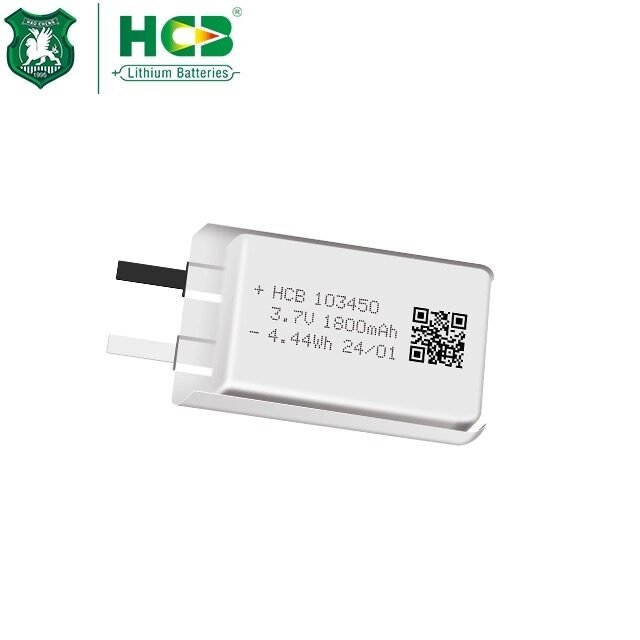
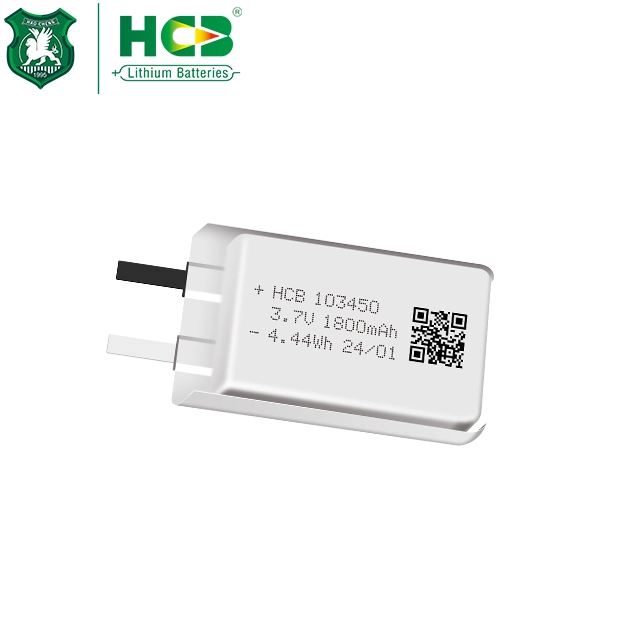
/inventory/nxd-103450-lipo-3000mah/product-photo.jpg— representative only, NOT the exact unit (HCB-branded cell explicitly labeled103450for correct size/form factor, but different brand, capacity, and terminal style — foil tabs vs. this cell’s 2-pin JST leads), sourced 2026-07-25 from https://www.enhcb.com/uploads/image/20241023/11/hcb103450-1.webp - Local files: see
/inventory/nxd-103450-lipo-3000mah/battery-and-solar-photo.jpeg(as-supplied photo, shared with the solar panel entry)
Verification
Electrical specs (voltage, capacity, energy) read directly from the cell's own printed label — high confidence, this is the most authoritative source available for a pack-assembler brand with no public datasheet. Charge/discharge current limits and connector pitch are Inferred from comparable same-size-code cells only — not confirmed for this specific NXD-branded pack. Confirm connector pitch by physical test-fit and, ideally, confirm the pack has integrated protection circuitry before charging, since none is visibly apparent in the supplied photo.
Notes / gotchas
- No visible protection PCB/PCM in the photo — bare pouch cells without integrated protection are more sensitive to over-discharge and over-charge than protected packs. Charge only through a proper LiPo charge circuit with cutoffs, and don’t discharge below the cell’s minimum voltage (commonly ~2.75-3.0V for this cell class).
- Connector pitch unconfirmed — verify SH (1.25mm) vs PH (2.0mm) before assuming this plugs directly into a Heltec board or any other SH1.25-based battery input. See Pinout section above.
- Standard LiPo handling rules apply: don’t puncture, don’t short the leads, don’t charge unattended for the first several cycles of a new/unknown pack, keep away from heat.