Xiaoyztan 160Ω Passive Electromagnetic Buzzer
Overview
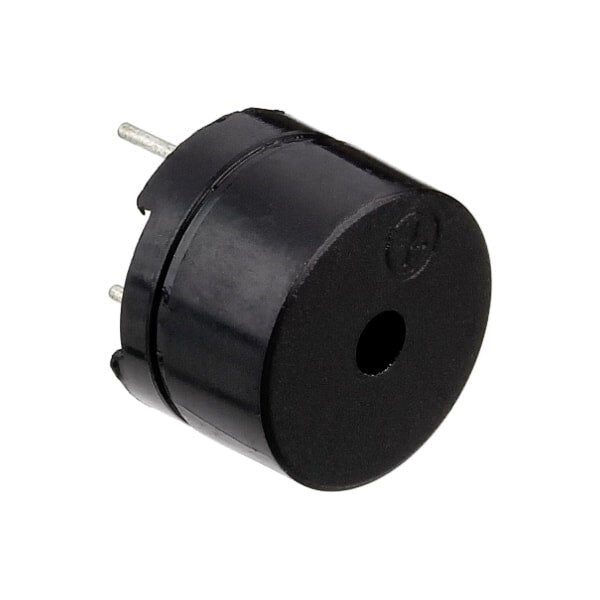
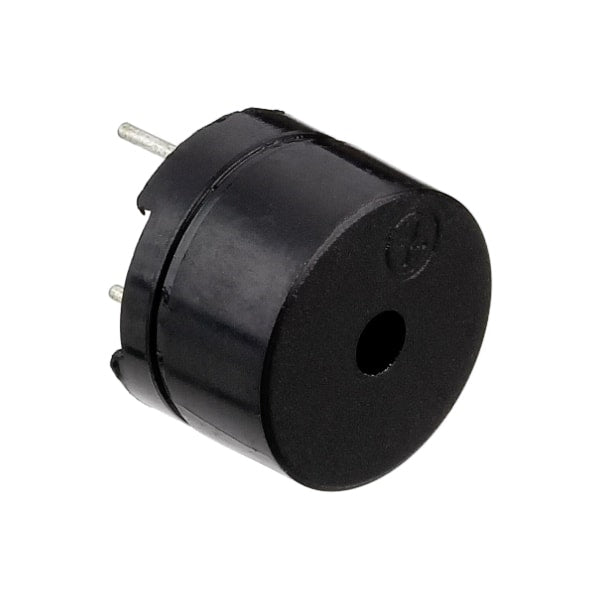
A small electromagnetic (coil-driven) passive buzzer — unlike an “active” buzzer, this type has no internal oscillator; it just moves a diaphragm in response to whatever AC/PWM signal is fed into it, so pitch is fully controllable by the driving signal’s frequency. Good for anything from a simple tone-generating alert to melody playback (e.g. tone() on Arduino), as opposed to active buzzers which only ever produce one fixed tone when powered.
Key specs
- Impedance: 160Ω
- Rated voltage: 3–5V DC
- Terminals: 2, unmarked from the listing — electromagnetic buzzers of this type are commonly non-polarized (it’s a coil, not a diode-based piezo element), but polarity marking/behavior not confirmed for this specific unit
- Drive requirement: needs an external audio/PWM signal (e.g.
tone()/PWM square wave) — will not produce sound from steady DC, unlike an active buzzer - Dimensions, resonant frequency, SPL: not found in available listing data
Pinout
| Terminal | Function |
|---|---|
| 1 | Coil terminal A |
| 2 | Coil terminal B |
No confirmed polarity requirement — treat as non-polarized unless testing shows otherwise.
Wiring / typical usage
Drive from a GPIO through a PWM/square-wave signal (e.g. Arduino tone(pin, frequency)), not a steady DC level — a passive buzzer stays silent on plain DC. For anything beyond a few mA of drive current, buffer through a transistor rather than driving directly from a GPIO, since exact current draw for this unit isn’t confirmed. Frequency sweeps let it produce different pitches/tones, unlike a fixed-tone active buzzer.
Code / libraries
- Arduino: no library needed for basic use —
tone(pin, frequency, duration)drives it directly for simple tones/alerts; melody libraries (e.g.NewTone, various “Arduino buzzer melody” sketches) work the same way for tune playback. - For PWM-based control on other platforms (ESP32/RP2350/etc.), any PWM-capable GPIO works the same way — set frequency to the desired pitch.
Source material
- Product listing: https://www.amazon.com/Xiaoyztan-Electronic-2-Terminal-Loudspeakers-Applicances/dp/B07GBTJP9F
- Comparable listings for cross-checking the “passive electromagnetic, needs external drive signal” behavior (same class of part, different resellers): search results for “50pcs passive electromagnetic buzzer 16ohm/160ohm 2kHz” consistently describe the same electromagnetic/coil-driven, externally-driven behavior
- Local files: see
/inventory/xiaoyztan-160ohm-passive-buzzer/amazon-order-list.jpeg(as-supplied order-history screenshot) - Product photo:
/inventory/xiaoyztan-160ohm-passive-buzzer/product-photo.jpg— representative (bare 2-pin electromagnetic buzzer, same black-dome/2-pin class), sourced 2026-07-25 from https://www.addicore.com/cdn/shop/products/AD319-2.jpg
Verification
Inferred from vendor listing only — no manufacturer datasheet exists for this generic part. Impedance (160Ω), voltage rating (3-5V), and “passive/needs external drive signal” behavior are stated directly in the product title/description — reasonably high confidence on those specific points since they’re concrete claims, not marketing fluff. Dimensions, resonant frequency, and SPL are not available from any source checked — first physical measurement of one from the 50-pack would be the only way to fill those in.
Notes / gotchas
- Passive, not active — it will stay silent if simply connected to DC power. Needs a PWM/AC drive signal (
tone()or equivalent) to make any sound at all. Don’t mistake this for a “plug in and it beeps” active buzzer when picking parts for a project. - Polarity behavior unconfirmed — test with a low-current source before assuming either orientation is required or forbidden.
- Selecting this part class means also picking a target frequency in firmware — unlike an active buzzer’s fixed tone, there’s no “default pitch” until code drives one.