UL1007 22AWG Solid-Core Hookup Wire, 6 Spools / 6 Colors
Overview
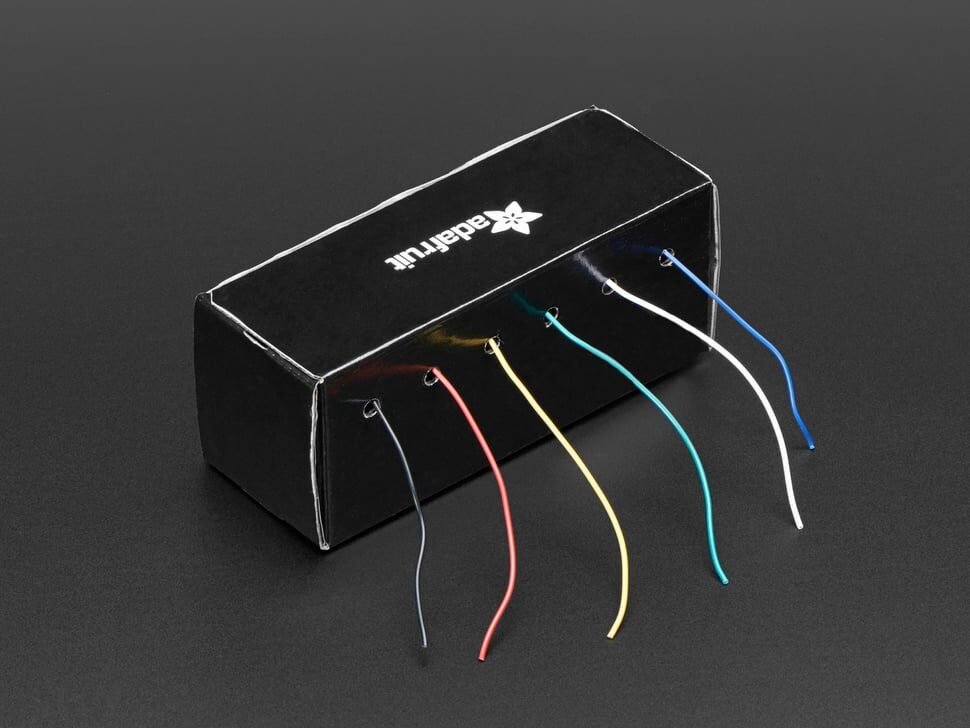
A 6-color set of UL1007-spec solid-core copper hookup wire, one spool per color, for point-to-point wiring and prototyping — the same wire class as the Dupont jumper assortment but sold as raw spooled wire rather than pre-terminated jumpers, so it can be cut to length and soldered directly (e.g. the splices and I2S bus wiring in Pocket Speaker). Single solid-core copper conductor per Alex’s supplied product manual, PVC-insulated, rated flame-retardant grade VW-1.
Key specs
Per the supplied UL1007 product manual (photographed page, all AWG sizes; this pack is 22 AWG specifically, confirmed by Alex):
- Conductor: single solid-core copper strand (specification
1/0.65, i.e. 1 strand at 0.65mm diameter) - Insulation: PVC, rated 80°C, flame-retardant grade VW-1 (vertical burning)
- Insulation thickness: ~1.6mm (as printed in the manual’s spec table for 22AWG)
- Conductor resistance: 56.4 (units not legible in the photographed table — likely Ω/km, standard for this kind of spec sheet, not confirmed)
- Carrying current: 3A continuous
- Instantaneous current: 10A
- Colors: 6 spools, 6 distinct colors (not individually identified — assume a standard assortment until spools are inspected)
Pinout
N/A — passive spooled wire, no fixed pin mapping.
Wiring / typical usage
Cut to length for point-to-point soldered connections — unlike the pre-terminated Dupont jumpers, this needs stripping and either direct soldering or crimping. Good fit for anything getting permanently soldered rather than breadboarded (e.g. the hand-wired splices in the Pocket Speaker build). 22AWG solid core is easy to strip and tin but doesn’t flex-cycle well — fine for a fixed harness, not ideal anywhere it’ll be bent repeatedly.
Code / libraries
N/A — passive wiring.
Source material
- Specs (conductor spec, insulation rating, resistance, current ratings): read directly from Alex’s supplied UL1007 product manual page (a generic spec sheet covering all AWG sizes 16–30; this pack’s specific AWG — 22 — confirmed by Alex directly, since the manual itself doesn’t identify which size was actually packaged). Manual page itself not saved to
/inventory/ul1007-22awg-hookup-wire-6color/— supplied inline in chat, not as a retrievable file. - Cross-check: Adafruit’s 22AWG solid-core 6-color hookup wire spool set — independent listing for the same wire class (22AWG solid core, 6 colors, 80°C/300V UL1007-style insulation) corroborates the 80°C rating and 22AWG solid-core spec read off Alex’s manual. Not confirmed as the same product Alex bought — used only as a cross-check, and as the source for the representative product photo below.
- Product photo:
/inventory/ul1007-22awg-hookup-wire-6color/product-photo.jpg— representative, not the exact unit. Sourced 2026-08-30 from Adafruit (https://cdn-shop.adafruit.com/970x728/1311-04.jpg), same wire class (22AWG solid-core, 6-color spool set) but not confirmed to be the same manufacturer/packaging as what Alex owns.

Verification
Specs transcribed from Alex's own supplied UL1007 manual page — the manual is generic (covers every AWG size in one table) and doesn't itself state which size this specific pack is; AWG (22) confirmed by Alex directly rather than inferred. The manual photo was rotated and had visible glare across part of the table — transcription should be treated as best-effort, not pixel-verified; re-check against the physical manual if any of these numbers matter for a real design decision (e.g. current-carrying capacity near its rated limit). Cross-checked against Adafruit’s independent listing for the same wire class, which agrees on AWG and insulation temperature rating.
Notes / gotchas
- The manual’s own spec table lists a “Section Area” of 0.4 for nearly every AWG row from 30AWG down to 18AWG, which doesn’t scale with strand diameter the way a real cross-sectional area should — likely a photo/transcription artifact (glare, rotation) rather than a genuine printed inconsistency, but not resolved either way. Doesn’t affect the numbers that actually matter for wiring (current rating, resistance) — flagged for completeness only.
- 6 colors owned but not individually logged — if a project’s docs need to reference wire color-to-signal mapping (like the GNSS cable in this library), inspect the actual spools and record the color set before relying on it.
- Solid-core, not stranded — don’t use this anywhere it’ll flex repeatedly (e.g. a wire crossing a hinge or connector that gets unplugged often); fine for a fixed, soldered harness.