SG90 Micro Servo (9g)
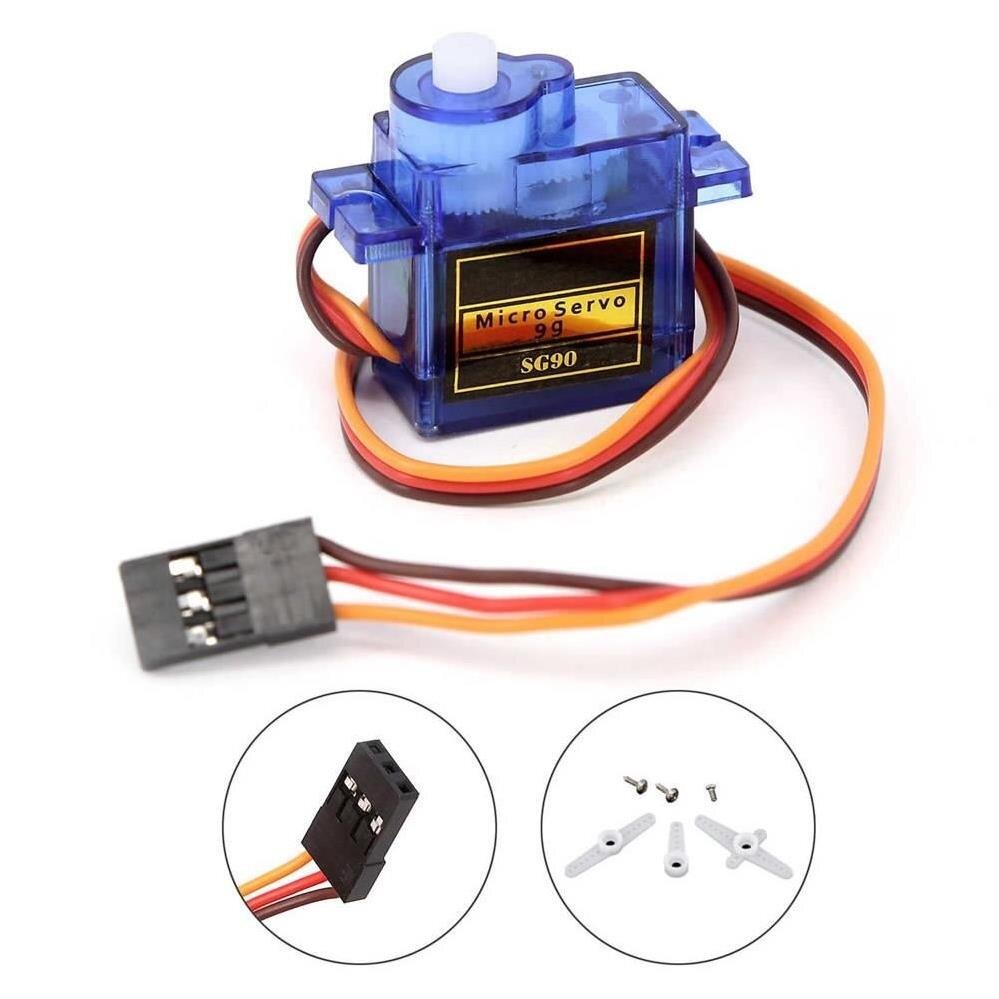
Overview
The extremely common 9-gram plastic-gear hobby servo — used everywhere from RC models to countless Arduino “sweep” tutorials. 3-wire interface (power, ground, PWM signal), ~180° of rotation (some clones limit to ~120°), plastic gear train (not metal-gear, so not rated for sustained heavy load).
Key specs
- Weight: ~9g
- Operating voltage: 4.8–6V typical for this servo class
- Rotation range: ~180° (varies slightly clone-to-clone; some SG90-class servos are closer to 120°)
- Stall torque: ~1.6–1.8 kg·cm at 4.8V (typical for class, not confirmed for this specific unit)
- Speed: ~0.1 sec/60° at 4.8V (typical for class)
- Gears: plastic
Pinout
3-wire cable (color order per the supplied photo, standard for this servo class):
| Wire | Function |
|---|---|
| Brown | GND |
| Red | VCC (4.8–6V) |
| Orange | Signal (PWM) |
Wiring / typical usage
Signal wire to any PWM-capable GPIO, power from a 5V rail capable of handling the servo’s stall current spike (don’t power directly from a microcontroller’s onboard 5V regulator if driving more than one servo or expecting load — use a separate 5V supply with common ground back to the MCU). Control via a standard ~50Hz PWM signal, pulse width ~1-2ms mapping to position (library-dependent, see below).
Code / libraries
- Arduino: built-in
Servolibrary —myServo.attach(pin); myServo.write(angle); - ESP32/ESP-IDF:
ESP32Servolibrary (the stock ArduinoServolibrary isn’t ESP32-compatible without it) - MicroPython:
machine.PWMdriven manually, or a dedicated servo helper library
Source material
- Case label (“MicroServo 9g SG90”) read directly from the supplied photo — high confidence on part identity.
- General SG90-class specs (torque, speed, voltage range): widely standardized across the hobby servo market, consistent with typical TowerPro SG90 datasheets referenced across community sources.
- Product photo:
/inventory/sg90-micro-servo/product-photo.jpg— the actual owned unit.
Verification
Case label read directly from photo — high confidence this is an SG90-class servo. Torque/speed specs are typical-for-class figures, not measured or confirmed for this specific unit — treat as a starting assumption, not a guarantee, especially since exact rotation range (180° vs ~120°) varies between SG90 clones.
Notes / gotchas
- Plastic gears — don’t force rotation past its mechanical limit or stall it under load for extended periods, gear teeth strip easily on this class of servo.
- Confirm actual rotation range (some clones stop well short of 180°) before assuming a specific angle range in code.