9Values Mini Micro Slide Switch Kit (90pcs)
Overview
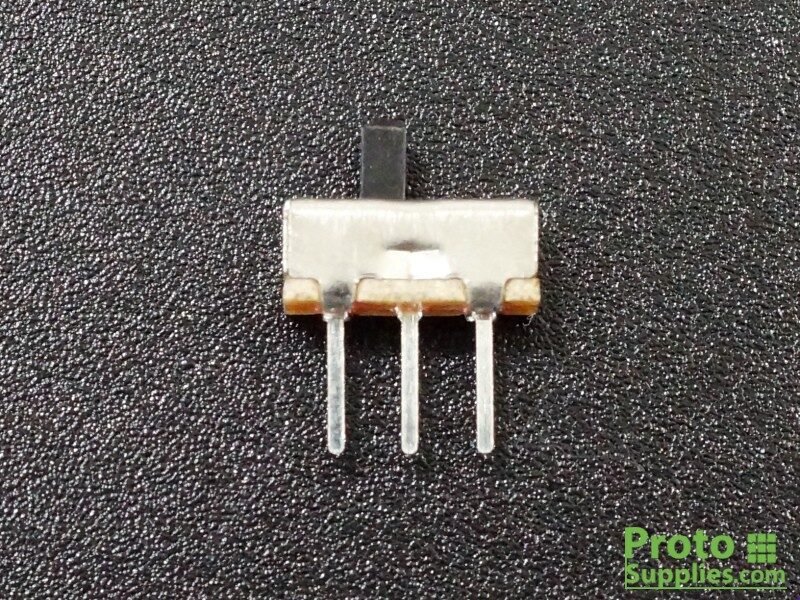
An assortment box of miniature SPDT (single-pole double-throw) slide switches — the small panel-mount toggle-style switches with a sliding knob, commonly used for power on/off selection, mode selection, or any two-position manual control on a project enclosure. “9 values” refers to 9 different physical variants in the kit (different pin spacing/orientation/knob styles — models like SS12D00, SS12D10, SS12F15, SS12F44), not 9 electrical ratings. Generic part, sold under several reseller names for what looks like the same physical assortment.
Key specs
- Operating voltage: n/a (passive mechanical switch)
- Contact rating: DC 50V, 0.5A (typical across this switch family — not confirmed per-variant)
- Contact configuration: SPDT (1P2T — one pole, two throw positions), 3-pin
- Pin pitch: 2.54mm (breadboard/perfboard compatible)
- Contact material: brass, silver-plated (per family spec)
- Mechanical life: >100,000 actuations (per family spec)
- Operating temperature: -25°C to 80°C (-13°F to 176°F, per family spec)
- Mounting: vertical panel-mount with knob, various body styles across the 9 included variants
Pinout
Standard SPDT 3-pin layout (applies to each switch in the kit):
| Pin | Function |
|---|---|
| 1 | Common (pole) |
| 2 | Throw position A |
| 3 | Throw position B |
Sliding the knob connects the common pin to whichever throw position it’s moved toward. No pin numbering is universal across all 9 body styles in the kit — check each switch’s own body markings/orientation before wiring, since some variants have inverted or reordered footprints relative to others.
Wiring / typical usage
Typical use: common pin to signal/power line, one throw position left floating or tied to GND, the other tied to the “on” signal — sliding the switch selects between two states. For MCU GPIO sensing, wire like any other manual switch (pull-up/pull-down as needed); the 0.5A/50V rating is far above logic-level needs, so no special consideration for GPIO-only use.
Code / libraries
N/A — passive switch, read as a standard digital input if driving a GPIO.
Source material
- Product listing (representative, exact ASIN for the ordered 90pcs kit not separately confirmed): https://www.amazon.com/9Values-Micro-Slide-Switch-90Pcs/dp/B0G5YNZCTJ
- Comparable listings for the same switch family (different pack sizes, same switches): https://www.amazon.com/9Values-Switches-Position-Miniature-Vertical/dp/B0GFW25GCT , https://www.amazon.com/EGSCST-Switches-Position-Breadboard-Electronic/dp/B0FK2TND98
- Local files: see
/inventory/9values-mini-slide-switch-kit/amazon-order-list.jpeg(as-supplied order-history screenshot, shared across several components ordered together) - Product photo:
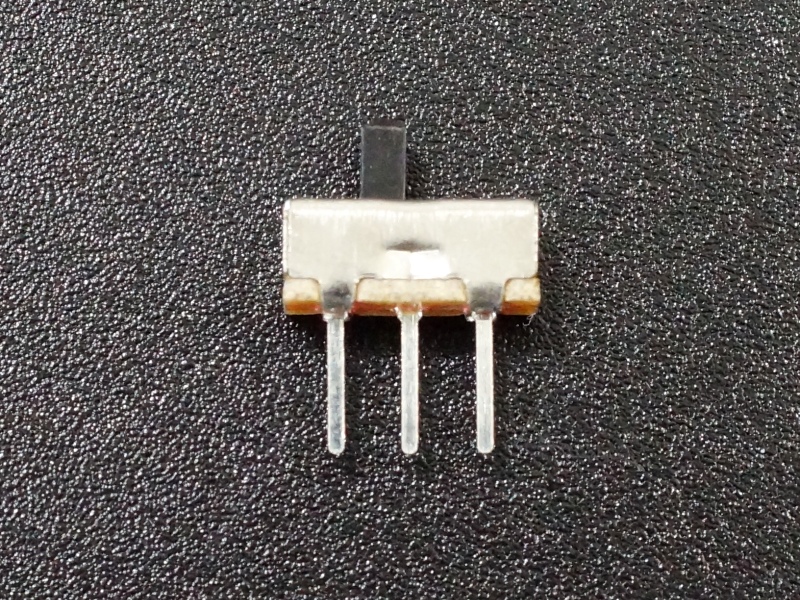
/inventory/9values-mini-slide-switch-kit/product-photo.jpg— representative (ProtoSupplies’ generic SPDT vertical slide switch, same family/pin style as this kit’s switches), sourced 2026-07-25 from https://protosupplies.com/wp-content/uploads/2017/11/Miniature-Slide-Switch.jpg
Verification
Inferred from vendor listings only — no manufacturer datasheet exists for this generic assortment class. Contact rating, pin count, and mechanical specs are consistent across every reseller listing found for this switch family, which is a reasonable confidence signal, but none trace back to an original manufacturer datasheet. Piece count (90) confirmed directly by Alex.
Notes / gotchas
- 9 different physical body styles in one box — don’t assume pin 1/2/3 positions are consistent across all of them; check each switch individually before wiring, especially before drilling panel mounting holes to match a specific footprint.
- Contact rating (0.5A/50V) is a family-wide figure from vendor listings, not verified per-variant — fine for any logic-level GPIO sensing use, worth double-checking before switching real loads near that ceiling.
- Used in: Pocket Speaker — one switch, common + one throw pin only, in series with the battery’s + lead as the master power switch.