3V DC Hobby Motor (Unbranded)
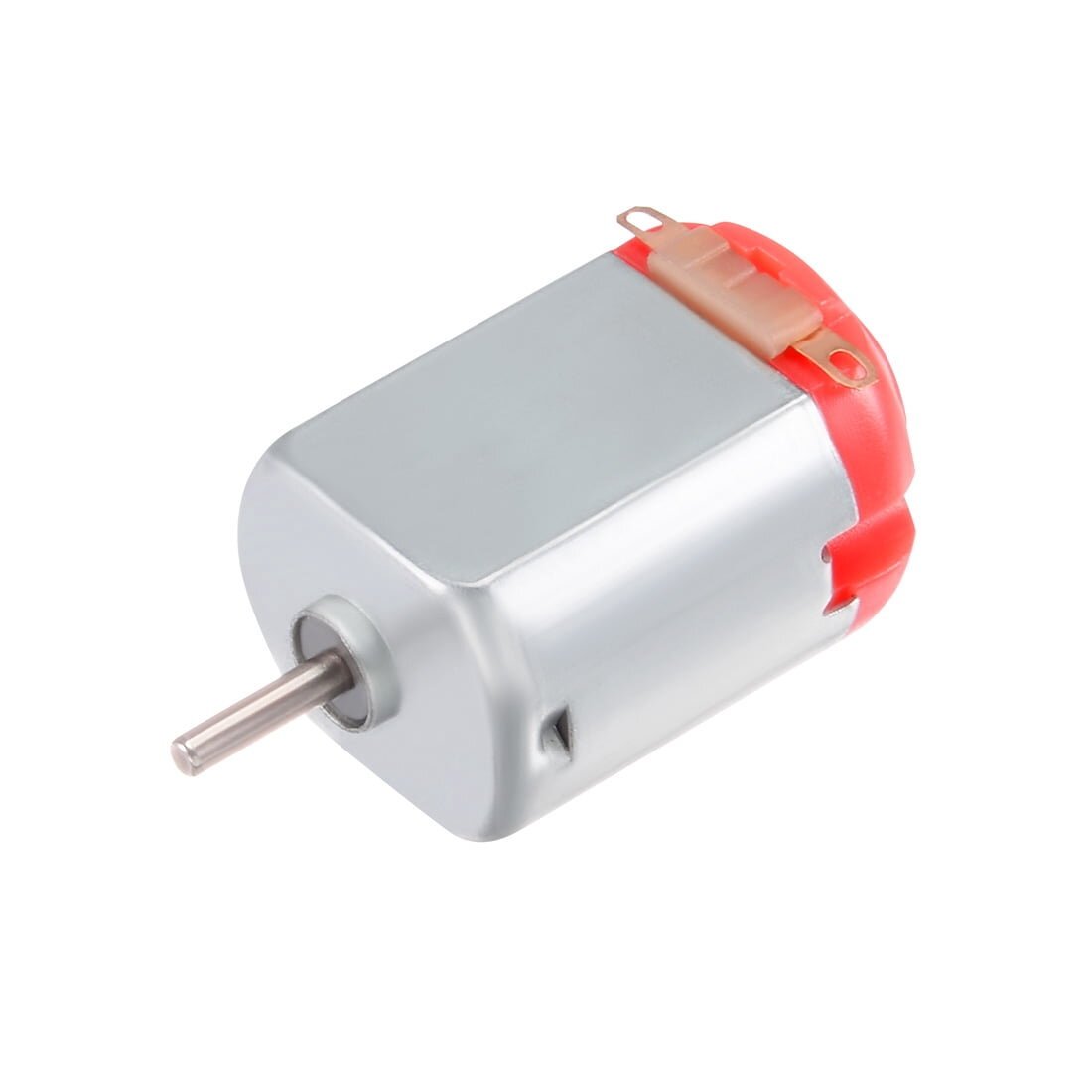
Overview
A small brushed DC motor, identified by Alex as 3V rated. No manufacturer, model number, or electrical rating is printed on the casing — this is common for the cheapest tier of hobby/toy motors (often bundled in solar-car or robotics starter kits without individual branding). Everything below the voltage rating is inferred from the motor’s physical size/shape class rather than a datasheet, since none exists for this specific unit.
Key specs
- Rated voltage: 3V (per Alex — not printed on the unit)
- Typical figures for this motor size/shape class (generic “130-size” brushed DC motor), not confirmed for this specific unit:
- Operating range: ~1.5V–4.5V (commonly rated 3V nominal)
- No-load current: ~70-150mA typical for this class
- Stall current: can exceed 500mA-1A typical for this class — do not drive directly from an MCU GPIO
- Shaft: single flat-sided (D-shaft) output shaft, small pulley/gear friction-fit target
- 2 solder-tab terminals, no polarity marking visible — brushed DC motors aren’t polarity-sensitive for basic on/off use, but reversing the two leads reverses spin direction
Pinout
| Terminal | Function |
|---|---|
| Tab 1 | Motor lead (polarity sets spin direction, not fixed +/−) |
| Tab 2 | Motor lead (polarity sets spin direction, not fixed +/−) |
Wiring / typical usage
Never wire a DC motor directly to an MCU GPIO pin — its stall/inrush current far exceeds what a GPIO can safely source, and the motor’s brush commutation generates voltage spikes (back-EMF) that can damage the driving pin without protection. Drive it through a proper motor driver (e.g. an H-bridge IC/module) powered from a separate supply rail, with a flyback diode across the terminals if the driver doesn’t already include one. Given the uncertainty on exact current draw for this specific unit, size the driver and power supply to the conservative “typical for class” stall-current figure above rather than assuming light loading.
Code / libraries
N/A — the motor itself is passive; control logic lives in whatever motor driver IC/module ends up driving it (e.g. PWM speed control through an H-bridge).
Source material
- Voltage rating (3V) per Alex, not printed on the unit.
- No manufacturer/model markings found anywhere on the casing in the supplied photo — physical size/shape/shaft style is consistent with the common “130-size” brushed DC hobby motor class referenced generically across hobbyist sources (e.g. datasheet for a representative 130-size motor, Adafruit) but this is a class-level comparison, not an identification of this exact part.
- Product photo:
/inventory/3v-dc-hobby-motor/product-photo.jpg— the as-supplied photo is a clean, in-focus, well-lit shot of the actual unit; no separate manufacturer photo needed (and none would be traceable, given no markings).
Verification
UNVERIFIED beyond the voltage rating Alex provided directly — no manufacturer marking exists on the unit to confirm current draw, exact stall torque, or shaft dimensions against an authoritative source. All figures beyond "3V" above are typical-for-class estimates only. Confirm actual current draw with a multimeter (no-load and briefly stalled) before sizing a driver circuit around the estimates here.
Notes / gotchas
- No brand or model marking anywhere — if this motor ever needs replacing or a matching driver needs precise sizing, measure actual current draw directly rather than trusting the class-typical figures above.
- Shaft appears to already have a small metal coupler/pulley fitted in the supplied photo — confirm what it’s designed to mate with before assuming a bare D-shaft.